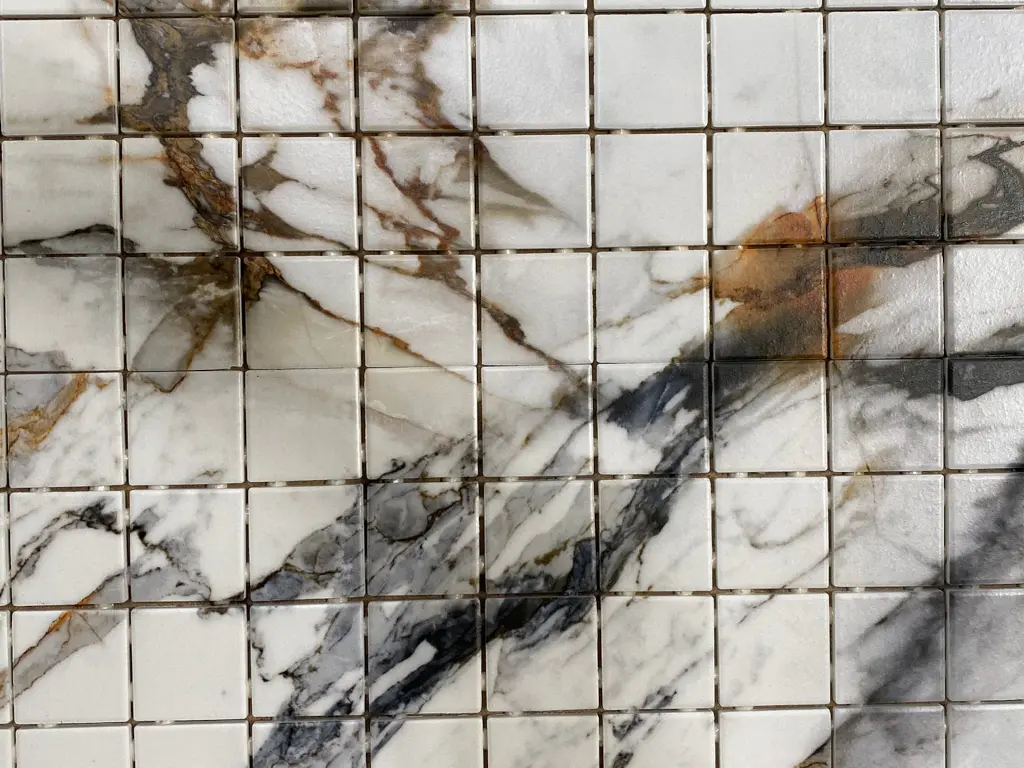
Polyprint Technology exists because traditional surface production had a ceiling — and we refused to accept it.
RSI Sports Group has been working in sports infrastructure across Europe for years — designing, installing, and maintaining sports surfaces for clubs, municipalities, and national federations. We understood the market deeply.
But one challenge kept coming up: customization. The demand for branded, personalized, and visually distinctive courts and surfaces was growing rapidly — from professional sports teams wanting court identities to municipalities creating community spaces that felt local and meaningful.
The traditional answer — painting, hand-stenciling, adhesive overlays — was slow, labor-intensive, and limited in quality and durability. It required massive manpower and physical space. It didn't scale. And it couldn't compete visually with what people actually wanted.
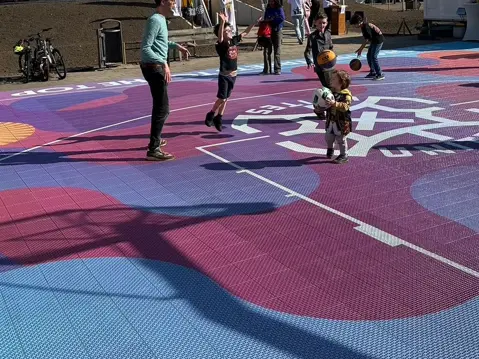
The concept was straightforward: use digital printing technology directly on the surfaces already in use — modular PP tiles, PVC, vinyl rolls, fiber cement panels, aluminum. Print any design. At scale. Without sacrificing the surface's performance characteristics.
When we first explored this idea with suppliers and materials scientists, the response was consistent: "It won't hold. The coating won't adhere. It won't be UV stable. It won't last under foot traffic. It's not possible."
We disagreed. And we set out to prove it.
What followed was years of material science research, formulation testing, and real-world validation — until Polyprint worked, reliably and repeatedly.
Testing adhesion properties across substrate families — plastics, ceramics, metals, wood composites. Identifying which coating formulations bonded reliably to each material under real-world stress conditions.
Rigorous durability testing: wear resistance, UV exposure simulation (3000h+), scratch hardness, impact resistance, and slip coefficient testing. Every batch tested. Every claim verified.
Building a scalable production method — from prototype runs to commercially viable output. Refining the process until custom printing at real-world volumes was achievable without quality compromise.
Polyprint's printing process is patent registered — protecting the unique combination of digital printing methods, surface preparation protocols, and coating formulations that make our results possible.
This isn't generic wide-format printing. The process was engineered specifically for the performance demands of sports, architecture, and commercial environments — and the IP reflects that.
Polyprint Technology is a division of RSI Sports Group — a European sports infrastructure company with deep expertise in surface installation, facility management, and sports equipment distribution across the Netherlands, Belgium, and beyond.
That grounding in real operational experience — understanding how surfaces are actually used, maintained, and specced in competitive environments — shapes everything about how Polyprint is designed and tested.
But while sports was our starting point, the technology we developed applies far beyond it. Ceramics, facades, aluminum, wood composites, fiber cement — the same core process delivers on all of them.
Talk to Our Team →We believe surfaces don't have to be neutral. Courts, facades, tiles, panels — they can carry identity, communicate brand, and enhance the environments people move through every day.
Polyprint makes that transformation available at commercial scale, without requiring you to change the surface you already use. The substrate stays the same. The performance stays the same. The design becomes unlimited.
Explore Applications →Whether you're a sports facility, architect, distributor, or brand — we'd like to hear about your project.